Turn AI From "Cheater" to "Tutor" with One Change #54
00:00:00 Jon Bergmann: Productive struggle. Friction. And how to use AI for homework. That's the topic of today's episode.
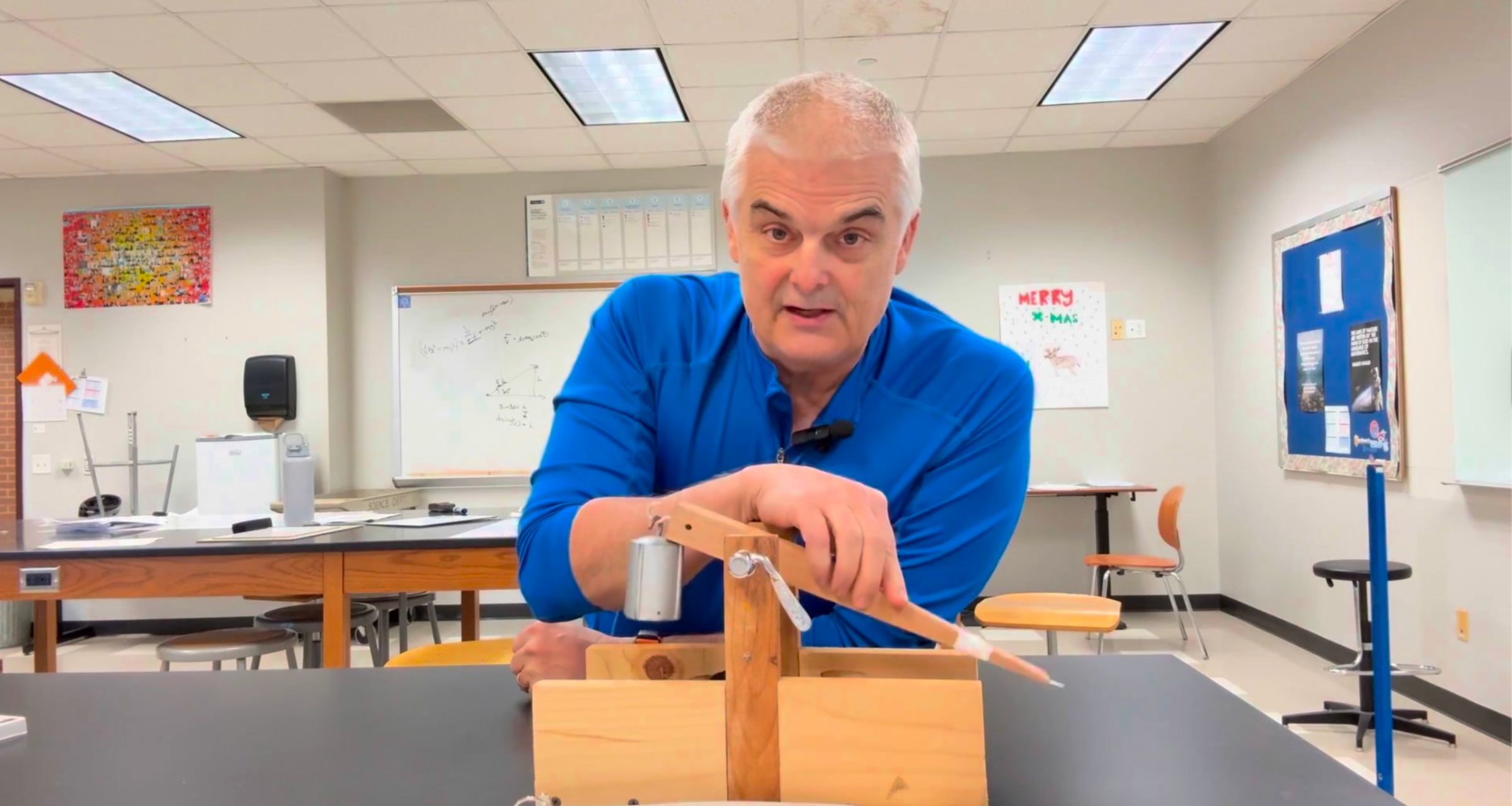
00:00:14 Jon Bergmann: Hi, I'm your host, Jon Bergmann on the Reach Every Student podcast here, and I continue to do a lot of thinking about AI and its impact on education. And I've really been enjoying the work of Stefan Bauschard. he gets a he's an email education disrupted. his newsletter that I get I assume it's like education disrupted comm. And he really has a lot of thought provoking things about AI in one of his recent, I don't know if it's a newsletter or email that I get. And I read his stuff vociferously. He he makes a really good case in point about something that's. Well, here's what it is. The idea of productive struggle that if we don't provide resistance, he uses the word friction. If we don't provide friction for our students, then they don't have that opportunity to learn. They need to go through a struggle to learn. Now there's also cognitive load theory. If you give them too much struggle, then they will give up. But there is a right amount of struggle and friction that can be had in the whole learning process. But the problem with how AI can be used in a negative way is it reduces the friction, it reduces the cognitive load, and then the students don't do that mental work. They don't develop their own mind, their own critical thinking skills. And that is the big danger of AI. And that's the thing we have to fight against as educators. And in this newsletter that he wrote out on November thirtieth, I got this. So I'm a couple of weeks later, he he proposes a new idea that's got me thinking. So in light of the need for productive friction, how should we now assess students which will cause them to get that struggle and that productive friction? And that's the question that I really want us to talk about today and what Burchard suggests. And I think he's right. It's really resonating is that instead of the way that we traditionally assess students, we need to move back more to oral exams. Now, think about this. If a student needs to come and argue about something or present a case for something and have a dialogue with an adult, then they are going to have to know their content, and then the AI is going to change from being the shortcut to then becoming your coach. I've discussed this with a number of colleagues, and I think it's fascinating. Again, think also about the history of education. If you don't know this, I'll fill you in. A long, long time ago, the way people did assessments was oral exams. Think Aristotle and Plato paper was too expensive to have paper tests. And then as paper become cheaper, and as we began to create larger schools where classes were bigger, we moved to students having to express their thinking in writing. By the way, part of this is a little scary to me because I want students to write. There's something very powerful about the process of writing as an author myself, right? It is still so powerful. So I'm I'm still in my nascent views of this, but I think there's a lot of power in an oral assessment, And I believe in these. And I do these all the time in the room behind me as you look, this is where I teach here at room two thirty one. And here in room two thirty one, I spend a lot of time dialoguing with students and basically giving little mini formative assessments and having conversations with students. And so I have been doing this for. This is my fourth decade in, in education. So I've been doing this for a long time, and I have so enjoyed that aspect of having the opportunity to have those one on one conversations with students. So in the history of, of America, the history of education, you've got like Aristotle and Plato, all those guys, and they did a lot more oral exams than we moved to the paper exams. But then the paper exams think Blue books and the universities. then the computers came on, and then all of a sudden, now the computers can do the thinking and write the essays, and now we get these digital things that are just not written by students. And now what's happening in universities, if you haven't seen this, they are going back to Blue Books. lots and lots of blue book sales have skyrocketed at universities because they can't ensure that they're getting the actual mind of their student. I don't think that's necessarily bad, by the way. And in one post on LinkedIn, I saw something that was very interesting. They said they found an old, old article that said this was a professor who was decrying the rise of blue books. This is one hundred years ago, because the blue books were going to take away the oral exams. And I think what's happening is we're now going full circle back to let's get back to some kind of an oral exam. Because I can envision this, a student needs to come and explain to me a certain concept, and they have to know what it is. just minutes ago, I had students in this room and I was having a chat with a few of my students about this. And I said, I think this value of this oral exam, and we just had this conversation about exams and they said, I like that idea. And and then I said, well, so, so let's, let's kind of play this out. I said, you've been studying Kepler's laws and particularly Kepler's third law. Explain it to me. And the student said, yeah, I don't know what it is. He he admitted. I said, well, then what would you do if you didn't know it? He said, well, I would get a-I and I'd have a-I help me learn how to do Kepler's Law. I said, yeah, and then you can have it debate back and forth with you until you understand it, so that when you come and you talk to me, a human, then you are then you will really have to understand it. So now AI becomes your tutor assistant copilot instead of your cheater friend. And I think there's a lot of value to that. Now, I've dialogue with other other educators here at this school and around the world, in fact, about this topic and the question that I'm still trying to figure out, how do you do this? If you've got six classes a day, thirty kids in a class, there's no way you can get to all your students. And, you know, I think the answer might be it might be AI. What if we were to set up a system where they're on some kind of an AI device and they're having a conversation literally, like out loud? Because AI can talk now, right? They can talk to the AI, and then you can have basically a clone of me. I could set up a prompt that's very specific to query kids about a topic, and then it can then tell me what the strengths and weaknesses are, and then it can be done. Um, you know, rapidly, rapidly and relatively effectively. Now, I'm a little uncomfortable with that because like I said, I really enjoy the one on one and one on four and whatever, one on five interactions that I have with my students. And so I'm not sure I'm ready to give that up. But I think that the answer is going to have to be something along these lines is we need to change how we assess our students. right now we're assessing by with just writing, we're trying to ascertain what's inside their brains by what they write down. And it's a valid thing, because writing is such a good meta activity for us to to really clarify our thoughts. I know that as I've written books, is I've got stuff up here, but I need to get it on paper and as I get it on paper or on my computer, is I get it on my computer and I type and then I say, oh, that doesn't sound right. And that that process of honing a sentence to be as concise and perfect as possible is so valuable. So I fear losing that skill. I know the AI can do it. Although AI is verbose, it's not a very good writer. It knows a lot of stuff, but it's not as good a writer as a good writer. But how do you get a student to become a good writer? They have to practice writing. So I'm a bit of a quandary, but I think this is a way where we can, if you will, assign homework, we'll say prepare for tomorrow's debate or debate might be the right word to be able to verbally explain this concept. And you need to be very cogently able to have this conversation, in the class. And, you know, you could do it as a whole group. I can envision like, this is the topic today. Tomorrow is Kepler's third law, the example in my physics class. And we're going to have a conversation. And I'm going to call on everybody. And you should expect to be able to say something important and valuable during this time. You can use AI to coach you. I encourage you to do that so that when you come back into class, you can really have that that explanation. So I think that that is a valid homework assignment. I have said in the past that it is the days of you sending home cognitively complex work is over, but I'm now amending that statement and saying potentially, if you're going to have them get coached at home on a particular topic, AI could then help them, and that could be cognitively complex so that they demonstrate their cognitively complex ideas in the class. So that's that I think is going to be a great use of AI going forward. So yeah, those are some of my thoughts on how do we introduce that friction that as Bauschard talks about, how do we introduce that friction purposefully so that students will think critically and learn better. And his proposal of debate, oral assessment, oral conversations in class makes so much sense. And now we can. We're not fighting the AI. We're allowing the AI to help tutor the kids on particular topics. So I haven't done this yet. I mean, not not in this sense, but we are finishing up our first semester here and I am planning to try these out, so I will let you know how it goes. As I did in the last podcast where I told you how the notebook LM fail on flipped classroom model worked. And by the way, since that podcast, I have played around with the tool. I mentioned the silo tool and it's okay. It brings up a video of me, and then you have some other voice who's trying to pretend to be me, teach the lesson with my video, and I can interrupt and we can have a conversation. It's not ideal. So I wish I could have it be me in the video. And then, I mean, I'm visibly in the video, but I'm not verbally in the video. And again, in a good flip classroom, I think having that content where it's just the teacher I might try around a thought I've had with that tool is potentially, I could say, watch my video and then open this and then have a conversation, if you will, with the AI to ask questions, because then it's being trained a little bit on the content. So it May ish work, but it's not one hundred percent awesome yet. So these tools are on their way. They're just not completely here yet. anyways, thank you so much for being one of my listeners. you guys make me better. If you are interested in want to have a particular topic that you want me to talk about, or to bring up a follow up, if you go to my website, John Bergmann, that's j o n e r g a nn dot com. There's a form you can fill out and just post a question.
00:11:40 Jon Bergmann: I would love to hear and get feedback from you. So thanks for being one of my faithful listeners. Or maybe you're just happening upon this. And if you like the podcast, please share it with your friends and hit the subscribe button. You know the thing. Hey, go out and reach every student. Hey, this has been the Reach Every Student podcast with me, your host, Jon Bergmann