Stupefied or Supercharged 55
00:00:00 Speaker: Welcome back to the Reach Every Student podcast with me, your host, John Bergman. Hey, this episode is going to be a little different. recently I had the pleasure of sitting down with a colleague, Rob Mesquita from Brazil. And, we had a deep conversation on her podcast, people, Possibility and Pedagogy. We covered so much ground in from the early days of flipped learning to the shifting sands of AI, that I wanted to share this with all of you. So it's a lot longer podcast than I typically have, but I thought you might be interested in this discussion. We dig deep into the why behind the work. We talk about flipped classroom that it was never just about the videos. It was solving the homework struggle problem and making sure the most difficult part of the learning was in the classroom, right? but more importantly, we discussed the mind shift change that we're facing right now. Artificial intelligence. ET cetera. ET cetera. I share my thoughts. She shares her thoughts. We also get into some personal territory. I talk about bike riding and why I believe teaching must remain fundamentally a human endeavor and how we need to really, think more deeply about what it means to be human in light of AI. So I hope you enjoy this episode and my conversation with robs. Hi, John, welcome. So many people know you as the name behind Flipped Learning, but few people know the teacher behind it.
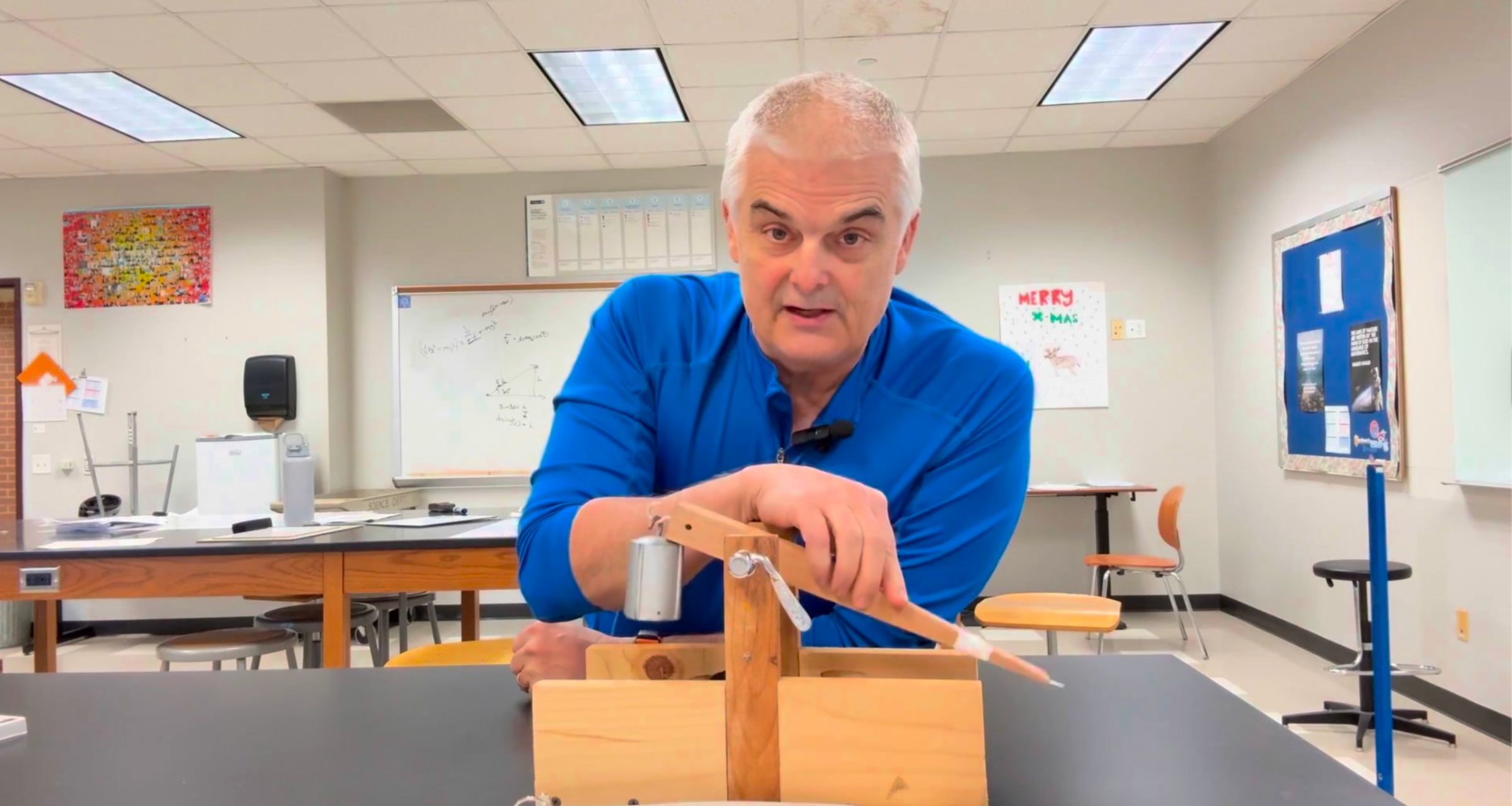
00:01:25 Speaker: So what did you notice about students that the traditional instruction wasn't honoring? Yeah, I think the biggest problem I think we were trying to solve is that we had students who were stuck, and they were ineffective when they would go home to do homework. They would go home and they would just they just couldn't do it. And so then what would happen is the kids would, you know, call a friend, which is fine, or they would cheat, and then come in and do things that they hadn't really understood. And so we're trying to help kids who need they kind of needed a tutor, and, but I couldn't be at their house when they needed the help. And so the big idea of flip. Let's do the hard stuff in class where the teachers present. So that's the person who really can help them the most. Their parents probably can't help them. And we were teaching high school chemistry, and most parents don't remember their high school chemistry, so they weren't any help to the kids. So that's, I guess, the big thing problem we were trying to solve. And when did you realize that it wasn't just a strategy, but it was a mindset shift? You know, pretty early on, I remember turning to Aaron and saying, I think this idea is a really big idea. And, that that eventually led us to say, writing that our first book, Flip Your Classroom. And, you know, then when that exploded, I maybe, maybe the the point where I feel like it was an idea that it really had legs is that we asked ourselves, we invited ourselves to the conference. It's a big edtech conference. when we reached out to the people at Esty, they said, hey, the the date for submissions is over and then we just quickly and like five sentences shared our idea, said, hey, this is what we're thinking about, this is what we're doing. And they contact us back and said, we're going to waive this and we're going to have you come out here anyways. And, and then when we went to this event, I remember the event, it was San Antonio, Texas, and it was like, I don't know, the room was so packed. It was unbelievable. We said, oh wow, this is, this is this is bigger than we thought it was going to be. And you know, we at that point, we still didn't have the book written and, we didn't realize what it was going to become for sure. What I love most about your work is that flip learning was never the end goal, right? It opened doors to something deeper, something bigger, and naturally led you towards mastery learning, right? Yeah, yeah. And what is the biggest barrier to equity in schools? The kids need access to, I'd say the teacher's brain. And if the teachers standing up and delivering the content in the class, they're missing an opportunity to have that more individualized and tutorial like time with their students. I mean, if you've got a kid who comes from great means or whatever, what I've often seen is they can hire a tutor, right? They're family is has the financial wherewithal to hire tutors and give their kids the help. But if you've got a kid who you know does not have that, you know, family that can support that kind of a of a education, then what do you do? But let's put the most valuable resource in the world. I think in a classroom and that's the teacher interacting with the student. But if you're wasting your time standing up and delivering a lecture, again, I still believe in lectures, but I don't think you should do it in class. Then now you can leverage your resource. You helping students with difficult concepts and that is going to provide equity. It was I was years ago the first ever flipped high school or flipped school in the world was Clintondale High School in the suburbs of Detroit, Michigan. And the principal at the time, he's now the superintendent of the school, Greg Green. He came to one of our early conferences and he said something very interesting, he said. He said, this is an equity issue. So it's a in the US, it's called a title one school. So it's the economically disadvantaged school. He flipped his schools. His test scores went from here up to here. it wasn't a school that was, you know, on the top of the lists in America because of the, you know, the socioeconomics surrounding the school. And he said, you know, when your kids go home. He was referring to my own personal children. When my children, they go home to a safe place and a place where they're where there's adults who care about them and Can, help them on assignments, I said. That's true, she says. But when my kids go to school, they often go home to more of a chaotic home environment that actually sometimes isn't safe. And they do not have adults who can help them with their homework. And when I flip the class or I flip the school, he flipped old school. When I flipped the school, he said, they now come to a place where there's adults who can help, and it's a safe place. And, they can get that cognitive help they need. And that's why he attributed, as he said, this is completely, you know, a social justice issue. And he saw this as, as yeah. So flipped just makes sense. And now, you know, we can talk more about the AI. I think we need to rethink this completely. Now in the age of AI, it actually makes flipped even more valuable or more useful as a strategy than ever before because of the advent of AI. Great that you brought up AI. I often see you advocating against the misuse of it. what worries you the most about how students are currently using AI? As because I see educators that are very anxious about it. Some see it as a shortcut, some see it as a threat. I'm a techno pragmatist. I think about AI. Is AI here to stay? Yes. Is AI going to transform the world? Yes. Is AI going to stupefy our students? Yes. if we let it. So. And I think that's the key, is that we have to think this carefully through. John had the upside of this, study or, paper, I think part of the paper. John had noted educational research out of Australia. he wrote a paper and said something to the fact that there's the there's the there's the very strong likelihood that there will be the downgrading of human intelligence because of AI. And he made a chart. I think it's a really useful chart. And this chart, he says if you take an expert and you give them AI you will like, it will amplify their work. In fact, he I think he says it might five x their work. But if you take a novice and you give them AI, it will degrade their work. And me, as a high school science teacher, I'm working with novices. And so here's what I'm thinking about. AI is that we want our students brains to grow. We want them to do that. Learning. Learning is hard. There's this productive struggle that students have to go through. And if they don't go through it, they won't learn. There's that process of that hard thinking which changes literally the the nature of their brain. Neurons are former, synapses are formed inside, the neurons are connected. All that kind of stuff is happening, and we need them to go through that struggle and we need to manufacture that. So I if I have a message for teachers, I've said this many times now, if you are sending home cognitively complex stuff, remember that as we talked about earlier, I used to send home the cognitive complex stuff and they couldn't do it. Well guess what? They can do it now. Or well, not really. They can have AI do it for them. And so but if you are a teacher and you're sending home hard stuff, assigning an essay, you're dumb. I'm sorry teacher, because students are going to use AI to do it. And so we need to move the cognitively complex stuff back into the class. Well guess what. That's kind of the big idea of flipped classroom, right? So in flipped Classroom, the idea is that it's been the idea since its inception is let's do the hard stuff in class where they have the help they need. Well, and so I my kids still watch cheesy flip videos in my class. And that's not, that's that's a legitimate homework assignment. And some students are actually using AI to learn the topic instead of watch my cheesy video. I don't care. I want them to come prepared to talk about, gravity or to, if you're a history teacher, to learn about the causes of World War Two or whatever the topic is that you're going to be covering that day. I think it's super important that we move that hard stuff into class. Do you believe that us as educators, we have the responsibility to teach them how to use AI? And one hundred percent, I've been actually talking about that here at the school. We're considering, like having a specific course for kids where they're going to learn how to use AI in a positive way. I mean, the positive ways I see to use AI, I mean, we need to limit it in some places and then allow it in others so we can teach them how to use it in good ways, because it is going to it's going to be a part of their life for the rest of their life. And and it's going to amplify so much. But again, here's my prediction for what it's worth. Here's what I'm afraid is going to happen. Those who embrace learning and then use AI to amplify them will become the Steve Jobs of the world. And they're going to become the leaders and they're going to thrive. But those who use AI as a crutch, and for it to just do the work and then they just take the easy path, it will degrade their lives. And I feel we're going to increase when we talk about equity earlier, it's going to increase the equity gap. But instead of it being necessarily economic, it's I think it's going to have economic consequences. It's going to be it's going to it's going to just it's going to bifurcate society even more. It's already bifurcated. So that's my fear going forward. So, you know, I have a son who, works with developing AI, right. And a few years back, I think he was an undergrad. Still, this was three, four years back, and I saw him doing homework. And instead of asking, for answers, he would, like, prompt like, I have difficulties in this problem. Teach me how to solve it without giving me the answer. And I thought that was really amazing. It blew my mind because, I saw something there. If we can teach students how to use this, to actually be, an AI and not as cheating, but as something that can help them learn, it is a great tool. It's it's revolutionary. Right. I mean, there was like, these agentic browsers. I'm talking to you right now in comet. You know, comet is an agentic browser. And I, tried this. I was at this, symposium in New York City, and somebody introduced comment to me, and I opened up my online portal, right Space. And I opened up the assistant button, and I said, take this test. And it was in my portal, and it went through and it got a, I mean, it went and it looked at each question and then boom, boom, boom answered every question got one hundred percent. You know, there's no learning there saying, take this test and submit the answer. You know, there's no learning. So, I mean, you can go into canvas or whatever online portal you've got and you can say, look, see if there's any homework that I have and do it for me, which includes like discussion forums and posts. I don't know if you saw this, but I wrote a piece for a podcast about basically, I think online learning is dead. I just don't know how you're going to do online learning, because if you're doing it some kind of a, you know, LMS or something like that, you can simulate that you're actually working and no one will ever know. I don't know, I'm I'm worried about that. I just had a conversation with some students, college students who just had come back to visit with me. I teach the high school, and they're they're former students here. And I was asking how things went. And, you know, one of them said, well, we're doing a lot of these online tests. and there's like, there's no basically they could just have AI helping them. And it's it's a joke. So everyone's getting hundreds, but no one's learning. So I worry that, you know, colleges are not ready for this. So I'm actually not just colleges. I don't think educators are ready across the board. K sixteen right. I'm glad you brought up higher education. This raises two questions on my end. First is that I'm in I'm in college. I'm a PhD candidate. Right. And I still see higher education professors teaching like they did twenty, thirty years ago. reading through PowerPoint presentations with no regards about engaging students. I actually had this one teacher who just simply opened up a book and started reading in class, and I, I was so offended because this was the required reading for that day. And, I mean, what kind of teaching is that? This is a teacher who is who is teaching other people, you know, graduate students to be future teachers. So they have no, interest in engagement, student engagement. They have, you know, they they think that active methodologies don't don't apply to them. so one question is about that. And the other one is that they are aware of AI. They are aware of AI usage. They still request simple essays from students as final papers and come and laugh it off. Oh yeah, my undergrads all got one hundred percent on their final papers. They all used AI. I think it's just, it's an absurd. Yeah. I don't know if I have an answer for colleges. I'm I'm. I fear for colleges across the globe. The reality is, AI is is going to replace a lot of the things that college prepares people for, right? the white collar jobs. And so the market for colleges, I believe many colleges are going to, you know, dissolve and go under. They're, you know, they're not going to be open anymore because they'll have less students. And the value of a college education will be less. And, you know, at least in the US, the cost of a college education is astronomical. And what's the financial benefit to the student to go to college? And I don't know if this is happening in Brazil, but in but in the US there's also a demographic cliff. A lot of young people are not having as many babies. And then when you do the math, there's literally less people to go to college. And so a lot of universities are going to be shutting their doors. And I don't think the colleges are ready. And the other issue I worry about in college is this sort of came up in this meeting, and it was really cool. I got a chance to go to this. I was invited to this symposium and it was all university professors and me, and these were high powered professors. You know, it was Stem or Stem professors. So computer science, nuclear engineering, mechanical engineering, aeronautical, a bunch of different things. So and they are worried. I had an advantage that a college professor doesn't have is I see my students more minutes in a week. I think a lot of that just comes down to that, because if you need to move, if my idea is you got to move the hard stuff in the class. But if you only meet for, you know, three hours a week, you know, because Monday, Wednesday, Friday, you know, at two o'clock or whatever your schedule is, how does that work? You know, because, you know, the idea of college is you do this much hours of homework compared to the hours that you're spending class. I don't know, I'm not I don't know that I have an answer for higher education. you know, my my lane has been right. What? You see me in the background? I'm in my classroom and my students, I'm going to do the best I can with them, you know? And my goal is to get them so they can understand how to use AI in a good way so that they can become the ones that thrive. And yeah, I don't know, I worry for college education again. I still wonder if those students who really take their learning seriously are going to be the ones who thrive, and those who don't will be degraded in their in their their opportunities and their cognition and etc.. It's interesting you mentioned, demographically that people are having less children, and it's true, people are having one maximum two now. And I read an article the other day that the middle child is under extinction. And I'm a mother of three, as you are a father of three. So this is very strange. Yeah, yeah, yeah. And I'm a middle child and you gotta have the middle children because we're the ones who who break the rules and, ah, think differently and. Right. That's that's. And I am that middle child. I am a, you know, when you look at, what do you call it, the, research on, you know, birth order. I am a classic middle child, you know, and I've got the responsible older brother who's totally first child, and then I'm not. So what about the youngest? Well, and he's more of a he. He loves to play. And, you know, you we we fit the model perfectly. Our family, especially as parents of three. Right? I mean, I follow this guy on Instagram. He posts videos of kids, of how kids behave in certain situations. You know, the oldest, the youngest, the middle and the middle is the filling of the sandwich. I mean, what would we do without them? But what about you? Any questions? What do you think? Where do you think it's going? What? I mean, what's your prog about AI and learning? I mean, where do you see it going? You've heard me, but what do you think? That is a great question. As a teacher trainer, what I hear the most when I present well, I presented in Mexico last year in January at EFA, and as soon as I opened up to questions, they jumped on how to deal with students using AI to cheat. And this was kind of set the mood for the entire year because it's what I heard the most. And although it is a problem, I understand it is a problem. I think it is our job as educators to teach students how to use AI. But the biggest problem behind that is that teachers themselves don't know how to use AI. So it's one of those issues like what comes first? Now who do you teach first, the teacher or the students? I mean, it's one of those, eggs and chicken situation. You know where to start, how to go about this? Yes. I mean, one of the guys at the conference, Robert Talbert, professor in Michigan, who also wrote the, kind of the greatest book on flipped learning, honestly, flipped learning for higher education. He's doing the the follow up. He was at this thing and it was something he said that made a lot of sense to me, is he says he's committing himself to spending a half hour a day playing with AI, so just he can upskill and be prepared. And, you know, just sometimes it's reading about AI from some newsletter, or sometimes it's using an AI model to try and do this. And even as before our conversation, I was trying to create an app using AI. So I'm not a I don't know how to code, I don't want to know how to code, but. I have an idea for an app. So it's like, let's see right now. So it's working in the background right now in my computer, there's this free tool. I said, oh, one of my newsletters that I read said, hey, this thing will create apps for free. And I said, all right, let's go. Here's let's see how you know. So I'm just playing with it, whether it ever turns into anything, I don't know. But these are the kinds of ideas we need to be. I mean, it's that lifelong learner, right? And so few teachers. This is going to sound terrible. Our lifelong learners, they but they're not really their thing. And then they stopped. Yes I understand. I love AI and I use it as my intern. And it doesn't substitute me. It doesn't do anything for me. But it does all the petty stuff like, you know, correct this, check this format. This. Well, but it's got levels of expertise that I don't have. Also. So, like, I don't know how to code. And in theory, this could create a rough draft of something that's a decent product. And then I'd have to go if I like, say I've got this app. And at that point I'm going to have to find somebody who's a coder to take it to the next level. But boy, having the rough draft done isn't a bad idea, right? Or, you know, for my consulting business, I've recently been, like, asking AI to help me with marketing. I don't know much about marketing, and it's actually helped quite a bit. And I've been creating, some, video shorts that I've been posting and they've been that that all came from, me having conversations with ChatGPT marketing because I don't I'm not a marketer. I'm a teacher educator. That's my role. And that's like, all right, help me to do this. And what would you suggest? And it's been it's, the response has been amazing, actually to these shorts. The number of hits and views is like, whoa, I didn't think that was that was. Wow. So it's it's it's doing jobs that I don't have the skill set for. I could have hired somebody, but, you know, I'm not made of money. And, you know, I don't know if it's, you know, it's really but probably, you know, it's replacing somebody. I guess if I was, you know, well funded my consulting business, then I would have hired somebody to do this, and that would have been better. Probably. But man, you know, for the cost of a ChatGPT subscription, it's it's very reasonable. So beautiful. So very recently, I was talking to someone about you. And everyone is always amazed how you are still a teacher, how you went back to the classroom after living all that. So what made you go back to teaching? I honestly felt called to. So I was at a conference in Florida twenty nineteen. Yeah, January of twenty nineteen. And I was starting to think about it. And, you know, I'd been traveling all over the world and doing the consulting gig, and and that was great, I enjoyed it. There's no question I did, but I was at this conference and I was hearing the stories of these teachers. I had dinner with a bunch of flipped classroom teachers, and they were telling me their stories of what was happening in their classrooms, and I thought I really missed that. And so then my wife and I went on a retreat in February of twenty nineteen, and two weeks kind of tried to disconnect, and I really felt that I needed to be back in the classroom. So, this is seven years back. If you look in the backdrop, you see me in my classroom. This is my classroom. and I'll have students here, and, I don't know, an hour. And, yeah, I, it's weird, like, this is my fortieth year in education. Most of it being in a classroom just like this. And some of my students have even asked that question. Mr. Bergman, why are you still in still teaching? Couldn't you be doing other things? They found out that I have this sort of other life. And I said, hey, I've been called to be here. So, yeah, I don't know. It's it's good. I, I limit how much travel and I don't say yes to everything. the priority is here. so I don't know. I, I come in early. I mean, I'm talking. I mean, I was I was the first car in the parking lot this morning at six fifteen in the morning. so I do a lot of my, you know, flip classroom stuff early in the morning and then get ready for school and go. And. Yeah. So I don't know. I work hard, I guess. Yes, you do work hard. most flipped and mastery conversations. I mean, people believe that most flipped and mastery conversations happen in well resourced systems. I mean, I see your classroom very beautiful. when we think about classrooms in the US, even the lowest, resourced is still, um, very different from the Brazilian reality, although we do have beautifully, set up schools, in the public system, we are still a little behind or a lot behind, from the US reality, much like, the global South in general. so what misconceptions do you think educators have about implementing flipped learning in these resource limited contexts? And what actually matters about technology when implementing it? push back on that because I saw it happen in the global South, in Argentina. So years ago, I have to it's been now. Nine years ago. Eight years ago. I have to do the math. But whatever. Something like that. I got invited to help with a project in Misiones, Argentina. Right. So right on the border of Brazil and Argentina. And it's a very low income area of Argentina and the secretary of Education. he invited me to come and help them start a project on flipped learning. And the idea was to flip the entire province. And I visited for a week, every a whole bunch of not every, but lots of, schools that they were going to start a pilot program in. And then they were they had created an app for Android phones because the kids had Android phones where the kids could come to school and then like, use Bluetooth because they didn't have enough internet like bandwidth purchased. And then they could download the videos to their devices and they could use their devices even if they were just a relatively cheap Android phone. Anyways, they made it work and they're still making it work. I mean, this is still it's a going. I would look her up. I you know what's happening in Misiones, Argentina, the province right now. And, there's ways to figure it out. Is it harder? Yeah, but I mean, now we got AI. It's like if you need to create an app for some Android phone. ask AI to make it for you so that you can Bluetooth when the kids come to school. So you're not using, you know, their, precious bandwidth. because one thing I was surprised at is the number of under-resourced families who still had an inexpensive, cell phone. Brazil is one of the highest ranking countries in number of cell phones per person. So, I mean, everyone has a cell phone. maybe not all the children, but, it's everyone has it. So, going back to this being a mindset, do you think? But even though it is, something that is, you know, present among most of the population, There is still a lot of resistance from admin, especially admin. Not not not the teachers, in using this as a resource. Even, at home, especially at home and even during, class time. Well, again, it's that the idea that, you know, we've never done it this way before. Therefore, we can't do it this way. You know. You know, my message to those administrators is the world has changed. And it's changed again with AI. Just in two years, three years since it really exploded. Whatever it's been, you're only hurting your students by not preparing them for the reality of the world that they're going to live in, so stop it. I don't know. That's my thinking, you know? And the reality is, is also too. I probably have a skewed perspective to some degree. On a positive side is that when people contact me and want my help, then they already are have a mindset that positive about change. But I also know the reality of the vast majority of schools aren't going to change, and I'm not going to be able to change them. You know, they're going to have to wait before the early adopters do this, and then just they have to by sheer pressure because everybody else is doing it. So those leaders and schools that are, you know, stuck where they are. I can't fix that. But maybe someday they will get fixed because they're going to have no choice. So yeah. So plans for twenty twenty six. You know, I want to continue to work on my podcast. I've really been enjoying my podcast and which we're recording here, and I want to continue to expand that. And continue to teach. I love the teaching. I want to continue to think about about AI. I'm speaking at some conferences about AI. I'm doing one in San Francisco in February. And so it's a few opportunities like that. I'll actually be in Brazil in June at a conference in Corbetta, I think. Is that how it's pronounced? Chiba. Chiba. Chiba. Oh, I totally butchered that. Okay, so I'm looking forward to that opportunity, too. So there's a few, you know, I'll have a few trips up. I'm also going on a extensive bike ride this summer. I'm going to go on a seven hundred and fifty mile. It's like a thousand over one thousand kilometer bike ride with, some folks for a couple of weeks. So, yeah. So my podcast is called People Possibility Pedagogy because I want to know about the people behind the pedagogy not only what they do as educators, but who are these individuals making these educational trends. And so tell me more about biking and your bike rides. My best ideas in life have come on a bike ride. So like the titles of books, the the next idea, there's something about going. And this may sound crazy, but, like, on a fifty or sixty or seventy mile bike ride, that just clears my brain. And it's just, freeing and healing. I don't know, all these things. So, yeah, I'll be on a bike ride, Saturday, and I it's it's. Yeah. So now and now I've started to embrace it. I used to do Ironman triathlons, and, I've got, I've got ankle problems. I'm getting old. I'm sixty one, and, the doctor said, yeah, running. Yeah, you can run, but it's just going to hurt. But I can still bike. And so, I don't know, a few years back, my cousin and I started doing these like extensive, like week long bike rides. And now I'm graduating to a two week long bike ride. So I don't know, it's it's. Yeah. And I get to see a new part of the country I'll be riding from, Salt Lake City, Utah to the Grand Canyon and spending a couple days at the Grand Canyon and one of another cool canyon called Bryce Canyon. So it's a, you know, scenic bike ride. It's also a organization that has, a purpose. It's like a fundraiser for it's similar to habitat for humanity. And so we'll actually spend a couple of days, helping people who are under housed become, less unhoused, I guess. So we'll do it work, you know, so I'll have a hammer and nails or, I don't know, a shovel or whatever I'm supposed to do, so. Wow. Sounds like a true adventure. very, very different. Because, like, biking is great biking with the purpose is even greater. Now. Biking with the purpose to build, carrying hammers and all. That's very, outside of the box. Yeah, yeah. The founder of this was a, you know, entrepreneur, and it's been around for years and years. I just discovered it. And so I'm really looking forward to getting to know the folks and who are behind this whole thing and, and riding bikes with them too. So. Yeah. does Chris come with you? No, no, no, she won't be coming on it, so. Oh, yeah. Yeah, she she likes exercise and but not like the crazy stuff I do, so. Yeah. What about your children? Do they come in these adventures with you? They're too busy. They're they're they're, you know, they've got their own life and whatnot. So, you know, they're all grown. And my baby is twenty eight. So yeah, my youngest has started to do like some, some like, running races and stuff like that. But yeah. So if my ankle would ever heal up, I could do a running race with her. But yeah, I don't know about you, but I'm having, bittersweet feelings about having, adult kids. You know, it's it's fun to hang out with them. It's it's a different vibe, but, I miss having children. I miss, it's not that I don't like it. It's just different. And I really miss having children around. Yes, well, at least I get a fix of that almost every day with, you know, they're teenagers. Not quite little, but. Yeah. So. So school keeps you young. Yep. One hundred percent. I mean, the whole school environment is very refreshing. And we learn every day. Yes, yes, I one hundred percent that being around the teenagers keeps me young and it keeps my brain working too, you know, because they're they're going to bring up stuff that's like I haven't thought of that, you know. No. Yeah. It's and there's the the banter that you can have with your students. It's a lot of fun. I mean, there's a lot of stuff that that people are missing out who don't understand the the beauty and the awesomeness of being a teacher. And, is it hard? Absolutely. And are sometimes the the frustrations terrible? Yes. But if it's your mission and your calling, then it's the best thing. it's it's interesting you mentioned that because I had something really fun happen to me last week. My son is my oldest son is actually a teacher, too, but he's working in the coordination of one of the schools I used to teach. And they were having, end of the year party for all the teachers. And what? And then he sends me this picture of him and two of my my kids, I mean, adults now. but, yeah, they are teachers there, and they recognize him and approached him and said, oh, yeah, your mom was our teacher and all. And one of them actually said that I was very influential in his life. And, so that, you know, they they went back to the school. I taught them to teach. So I thought it was very inspiring. have you ever had something like that happen to you? Yeah. Yeah, yeah, yeah, yeah. Well, actually, I know two of my daughters are teachers. One's in even a high school science teacher. So, and that's that's been, fun to watch them grow. I mean, one, that's their tenth year, I think ninth year or something like that. So the older one. So. Yeah. And seeing that and yeah, even when some of the students came back just even a couple days ago because we're, we're at the end approaching Christmas right now. And a lot of alumni are coming back because they're off college a little early and they're coming to visit. It's been good to just visit with those kids and see how they're thriving. And yeah, it's very rewarding, right? I think for us teachers, when I became a teacher, it was mostly because I had very great teachers who were very influential and still are. But I thought that if I could have that, that effect on just one person, that's all I wanted. I was listening to a podcast this morning and they made a suggestion, and I think I want to follow up on it because they said, think about the person or some of the people who've made a big impact is a kind of a Christmas episode of the podcast. and thank them, you know, because there's people I've got a teacher in my life who made a huge difference in my life, and she was my high school chemistry teacher. I became a high school chemistry teacher. And so, you know, at one point I did get a chance to, to thank her, and, you know, in tears, I thanked her. It was just a very powerful, meaningful phone conversation years ago, actually. That happened. An interesting story. I talked about how I was trying to decide what I was going to do at that. We took that retreat in twenty nineteen. Well, we're in the hot tub at the resort that we were staying at and in the hot tub is this lady. I said, oh, what do you do? I'm a teacher. Oh, where do you go? Where do you teach? She told me, I thought. Do you happen to know Eddie Anderson? She said, yeah, she's a good friend of mine. No, this was the teacher that made the difference. And I said, any chance you could give me her phone number? And so on that retreat, I was able to connect with her and just. It was so deep and meaningful. You know, it was, you know, I'm a person of faith. And I really felt God said very clearly, you need to go back to the classroom. And here's a great sign. That random lady in the hot tub who knows your mentor, who you've lost contact with and you can connect. It was it was like, everything fits. I need to be back in this classroom. And as you can see, I'm back in this classroom. So. And it is a very fun classroom, right? Yeah. In fact, you got the experiment set up behind me, so. Yeah. What is that? There are roller coasters. They're going to take balls that roll down the ramps, and they're going to measure energy, kinetic energy and potential energy and conservation of energy of a roller coaster. So it's actually this is the last couple of days before this term ends. So they're set up for next semester. So how do I keep it all together. It's like I've got a little bit of time I'm going to set up for next semester so that I can get running. So, you know, I'm trying to be efficient with everything. So I'm setting up for January the fifth or whatever it is when we come back. Oh wow. You are so organized and planning ahead for next semester. That's amazing. I've always had trouble with physics and chemistry. I was very, very into the humanities, languages, theater, history and all that, But I had a big problem with chemistry and physics. It took me a while to figure out that the problem was the math. The math behind it. because I actually did enjoy science and I loved my biology and my marine biology classes. But I had trouble with physics and chemistry in high school. That's cool. wrong with that. So. But you didn't have Eddie Anderson as your high school chemistry teacher. That's the problem. You didn't have that inspiring teacher, right? Yeah. Coming to think of it now, you're probably right. My my chemistry and physics teachers, they were normal. Not not. I mean, I really liked them, but they didn't make an impression. But my marine bio teacher was amazing. Sure. Yeah. And then. Yeah, I think that's a lot of work comes to, is that finding that inspiring teacher. And some students have a bent in one direction or another too. I mean, I've had kids who really appreciate my class, but they love theater or whatever, and which is great, right? Yeah, that's their that's their jam. And I support that one hundred percent. So, but I guess science teachers are very popular nowadays, right? my youngest son's graduation, was, was this past year, and they honored the, the chemistry teacher who was, the student's favorite. And, he delivered a very inspiring speech to at the ceremony. At the commencement ceremony. So, I was really impressed. I was really proud of it. Yeah, yeah, yeah. So I hope I've done that for a lot of students as well. So even if they were not, this was not their jam, which is fine. Well, I'm sure you do. Your students are very lucky to have you. Is there anything else you'd like to add? No. Yeah. This is a great conversation. I really enjoy chatting with you. You're such a thought provoking person. So. And you as well. I mean, you're an inspiration. I love your posts about AI as I'm an AI enthusiast. they make me see things in another way. they make me think about it, reflect on it. Because sometimes, you know, I we may miss, details here and there, but your posts keep me grounded. Yeah, I'm. I'm not in love with AI, and I'm not. Yeah, I'm a tech pragmatist. That's techno pragmatist. We need to be pragmatic about what it is and when it should be used for kids. That's the thing. I think we need to be thoughtful. Like, you know, it's okay to give adults certain tools, right? But students are different young people and their their development matters. I mean, you know, there are certain things, you know, we don't let kids have access to until they're old enough. Right? And to be on Facebook, you need to be thirteen, right? So, you know, there's certain, say, media. I we kept our kids away from when they were younger because they were not developmentally ready for that media. And I think we need to think about that in terms of AI as well. And again, I'm not saying anti AI, but there's got to be ways to think about it. I mean, the thing I'm most upset about, although I'm seeing some positive movement in this is from a teenage perspective is these AI chatbots, you know, the AI boyfriends, that character AI and stuff like that. These are terrible ideas and a terrible use of AI and they will only cause human suffering. I really believe because I believe we were made for relationships with real humans having like, we're having a conversation right now even though we're not in the same physical space. It's with a real human. I'm not talking to a chatbot, and I fear these things will really cause much suffering. And so it's a terrible, terrible application of AI. But I know it's taking off like wildfire, too. So. So that's the kind of a thing we need to protect our kids from. We know it's going to hurt them. And so we need to not we need to put some safeguards now while some kids figure out ways to get around it. Of course they will. And I can't solve all those problems. But we could design the system so that it's really hard for them to have access to things that we know are going to harm them. As a matter of fact, my daughter in law just passed behind the screen here and I was reminded of a conversation we were having the other day. She was telling me about her friend who's using ChatGPT as a psychologist. I mean, this girl is asking for advice on how to deal with her boyfriend and her relationship. And ChatGPT is actually giving her other strategies like, oh, give all his belongings back and do this and do that. I mean, I thought it was just absolutely crazy. I don't think it's a good idea. I mean, get a real psychologist, get a real human. Right. I there may be, you know, I, I, I see a life coach once every week almost. And but he's a real human and and he's been and changed my life in a lot of ways in a very positive way. But, the idea of turning that over to a bot. Oh, my gosh, where are we headed? That that is that those are the kinds of things that I think are very concerning with AI. You know, we were designed, I really believe, designed for in fleshed relationship with people. Right. To have real relationships with real people. And if we get away from that. Then we're getting away from who we were designed to be, and I would actually use a fancy word ontologically. We are ontologically. That's how we are. That's that's the, you know, the study of what it means to be a human. And we need to be actual, real humans and to a degree that we go away from our ontology, what we're what we're designed for to that degree, we will not thrive. We will will suffer, honestly. And I want people to thrive. I want and most importantly, to me, it would be my family and then my students, the people that are most closely connected to I want them to be those. And so how do I help them? But I also, you know, with a weird platforms, I want the global them to to not suffer. I, you know, the people who are going to listen to this podcast, I want them to be ones who thrive as well. Yes. And as we mentioned before, it all goes back to learning how to use these tools for good. Right. well, this has been very inspirational. It's been an honor to have you. it's all always a pleasure to talk to you. I'm very humbled, and I learned a lot. So I thank you very much for your input and your time. And, Yeah, I hope to see you soon. Right. You are coming to Brazil? yeah, in Brazil and in the fall or this summer. Whatever. Summer? Yeah. My summer. Fall. Spring. Something like that. I stumbled in my head in June. Well, close enough to winter for us, for me, for me. Something like that. Whatever. So I thank you once again. This was perfect. and I hope to see you soon. Bye. All right. Well, I hope you enjoyed this episode of the Reach Every Student podcast. Hey, if you
00:48:10 Speaker: this show, click the subscribe button. And, yeah, you know the deal. Hey, go out and reach every student.