Facing the Techlash: Reclaiming Classroom Trust | Episode 83
An operational manual for district leaders to protect student cognition, eliminate automated shortcuts, and humanize instruction | Episode 83
Schools everywhere are reconsidering technology. Cell phone bans are sweeping multiple states, and districts across the country have begun imposing rigid classroom screen-time limits.
We are watching a quiet educational rollback. Systems are buying paper textbooks again, subscription software budgets are being frozen, and the “techlash” movement is gaining massive steam. At several recent spring graduations, when commencement speakers attempted to extol the frictionless virtues of artificial intelligence, college graduates openly booed them.
So, is technology inherently evil in our schools? Should we retreat into a permanent Luddite posture? Is all generative AI toxic for our students?
As a 41-year classroom veteran who was at the forefront of the global Flipped Learning movement, I see the real, systemic dangers of automation in my room every single day. I have watched firsthand as students use shortcuts, offloading their cognition to AI and actively stupefying themselves. Using AI to complete an assignment is like bringing a forklift into the mental weight room: you get a clean floor, but you build absolutely no muscle.
But I also refuse to be a Luddite. There is a definitive path in which technology serves as an engine for human expertise rather than a bypass of it.
Our unwavering priority must always be to protect the productive struggle—ensuring our students thrive by leaning into the messy, irreplaceable qualities that make us fundamentally human.
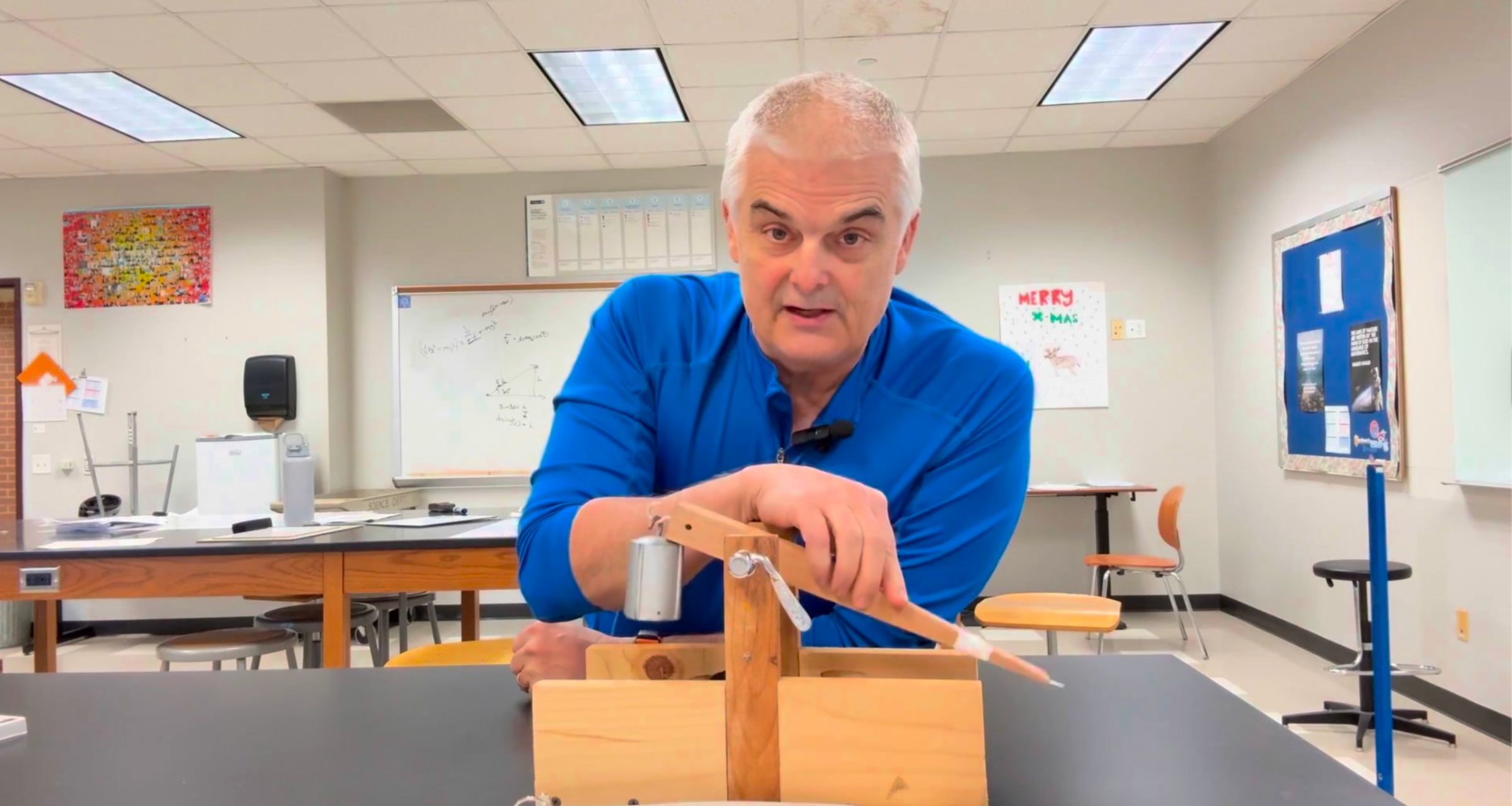
In the masterclass video above, I lay out the explicit operational architecture to solve this cognition crisis. The centerpiece of this video is the unreleased keynote address I delivered in May 2026 to university deans and medical educators in Curitiba, Brazil. In it, I break down the physical mechanics of the classroom space and outline the definitive solution.
That solution is a new structural system I developed called the MasteryFlip Framework. To turn our classrooms into true attention sanctuaries, we must integrate three distinct pillars:
-
AI Engines: We shift raw information delivery completely out of the room. Using the best elements of Flipped Learning with an AI twist. This is the flip in the MasteryFlip
-
Analog Roots: The moment the bell rings, the devices disappear. Laptops go into backpacks, phones are put away, and desks return to raw pencil, paper, and physical text real estate to enforce biological neural friction.
-
Mastery Vivas: We completely change the assessments. To make grading entirely AI-proof, student evaluation is moved back to a face-to-face, human-to-human verbal defense of logic. If a student cannot defend their thinking on the mastery bench, they do not move forward.
If you are a principal, curriculum coordinator, or department head ready to standardize this across your entire building this fall, you don’t have to navigate the transition in isolation. I have packaged this into a fully asynchronous, four-hour MasteryFlip Certification Course.
Educational leaders are moving fast to get ahead of the autumn semester. In fact, just today, a block of nine educators from a single school registered together.
To support building-wide deployments, if you register a team cohort of four or more educators from your campus, the price is cut in half.
Stream the full presentation above to understand both the problems and the promise of AI in your classrooms. Look inside my physical classroom and see how to scale real-time oral defenses across high-capacity rosters without causing staff burnout.
If your school is ready to survive the techlash and hardcode focus back into your classrooms, click the framework link below to claim your team passes.
Get Your Building Certified: Access the MasteryFlip Framework
Quotes from Certified MasteryFlip Educators
"I think this is my favorite opportunity for AI use... the Socratic Mastery Viva thought partner (either practice for the summative with the teacher), or similarly as a check on understanding and completion of pre-work before the next class." — Certified MasteryFlip Participant
"I love a good 20 minutes (30 if I'm being honest) of direct instruction during class. I do sincerely think it is one of my strengths as a teacher and it is much fun for me, which helps me sell it. However, I'm not sure each and every student is learning enough from it to warrant the use of class time in that way to that number of minutes." — MasteryFlip Graduate
"Relying only on the finished project invites the temptation of students using AI or not actually showing mastery. By having a Mastery Viva or human aspect to the grading it allows for that friction and critical thinking to take place in front of the teacher." — Classroom Teacher
Key Moments in the Presentation
-
00:00:00 — The ISTE Shift: Analyzing the macro trend of school boards, superintendents, and curriculum directors freezing software budgets.
-
00:00:11 — The Crisis of Trust: Why the flight away from unvetted software isn’t a luddite retreat, but an institutional demand for learning integrity.
-
00:00:39 — Seceding to Big Tech: Confronting the reality of placing frictionless devices in student hands without a protective framework.
-
00:00:48 — Stupefying the Novice: How offloading thinking to generative AI causes cognitive drift and atrophies student logic.
-
00:01:02 — Redesigning the Environment: Why the solution to automated shortcuts requires changing the physical space, not buying another software patch.
-
00:01:15 — The Curitiba Keynote: Transitioning to the full, unreleased presentation delivered to college deans and educators in Brazil.
-
00:01:47 — The MasteryFlip Architecture: An introductory blueprint of the three core pillars: Socratic AI Engines, Analog Roots, and Human Checks.
-
00:03:01 — Real-Time Momentum: Establishing institutional social proof by highlighting the nine-teacher team cohort that registered today.
-
00:03:12 — Building-Level Scalability: How school departments use the four-person, half-off cohort track to coordinate entire buildings.
-
00:03:28 — Summer Special Editions: An early look at upcoming full-length transcript drops with leading research professors from Harvard and MIT.
-
00:03:56 — Shifting the Classroom Physics: Splicing into the live address to track why student Aha! moments have vanished over the last two years.
-
00:04:41 — The Principal’s Mandate: A transparent look into personal classroom failure when first tasked with testing unvetted AI shortcuts.
-
00:13:59 — Forklifts in the Weight Room: Deconstructing Ted Chiang’s metaphor on why schooling must remain intentionally inefficient by design.
-
00:19:02 — Case-Based Collaborative Learning: Lessons from a site visit to Harvard Medical School on why active methodology packs lecture halls.
-
00:20:22 — The Threat to Clinical Reasoning: Why textbook-perfect AI data shortcuts de-skill training novices who face unpredictable real-world environments.
-
00:21:46 — Friction as a Feature: Why engineering deliberate resistance back into assignments is the only way to build biological cognitive muscle.
-
00:22:20 — The Papal Manifesto: Analyzing the Holy Father’s warning on how frictionless automated summaries extinguish the human desire to ask questions.
-
00:23:44 — The Rockefeller Symposium: Why a room of nuclear engineering and computer science professors concluded that flipping the class is the only answer to generative AI.
-
00:25:25 — Flipping Bloom’s Taxonomy: Transitioning direct instruction out of the group space to maximize face-to-face cognitive lifting.
-
00:29:12 — Reprogramming the AI Engine: Moving away from automated answer generators toward interactive, sandboxed Socratic dialog tools.
-
00:30:57 — Reclaiming the Desk Real Estate: Enforcing the “Lids Down” protocol to build an analog attention sanctuary using raw pencil, paper, and physical text.
-
00:33:05 — The Mastery Viva: Reintroducing the oral exam as a two-minute formative conversation to human-proof your assessment data.
-
00:35:40 — Handling High-Capacity Rosters: Tactical strategies to scale oral defenses across large groups using secure LMS wrappers and assistants.
-
00:38:34 — The Path of the Thriver: A final review of the great bifurcation and why mastery learning keeps kids on the winning side of the automation wave.
-
00:40:22 — Reclaiming Samuel: The real-world story of a high school football player who rejected the easy button to achieve a perfect score on an honors physics re-test.
-
00:42:52 — Hardcoding the Struggle: Why prospective teachers and veterans must design environments that protect the biological struggle of learning.
-
00:45:19 — Remaining Profoundly Human: The pressing duty of educators to defend human dignity against new forms of mechanical dehumanization.
-
00:46:02 — Classroom Outro: Splicing back to the physical room bench for a definitive B2B call to action for leadership teams browsing your platform this week.
Jon's created several courses that will help you in the age of AI. Each short course will help you become a better teacher.